DOJ: AI 'ghost students' stole millions in student loans
DOJ charges five in 'Operation Ghostbusters' crackdown on AI-assisted 'ghost student' federal loan fraud using stolen identities
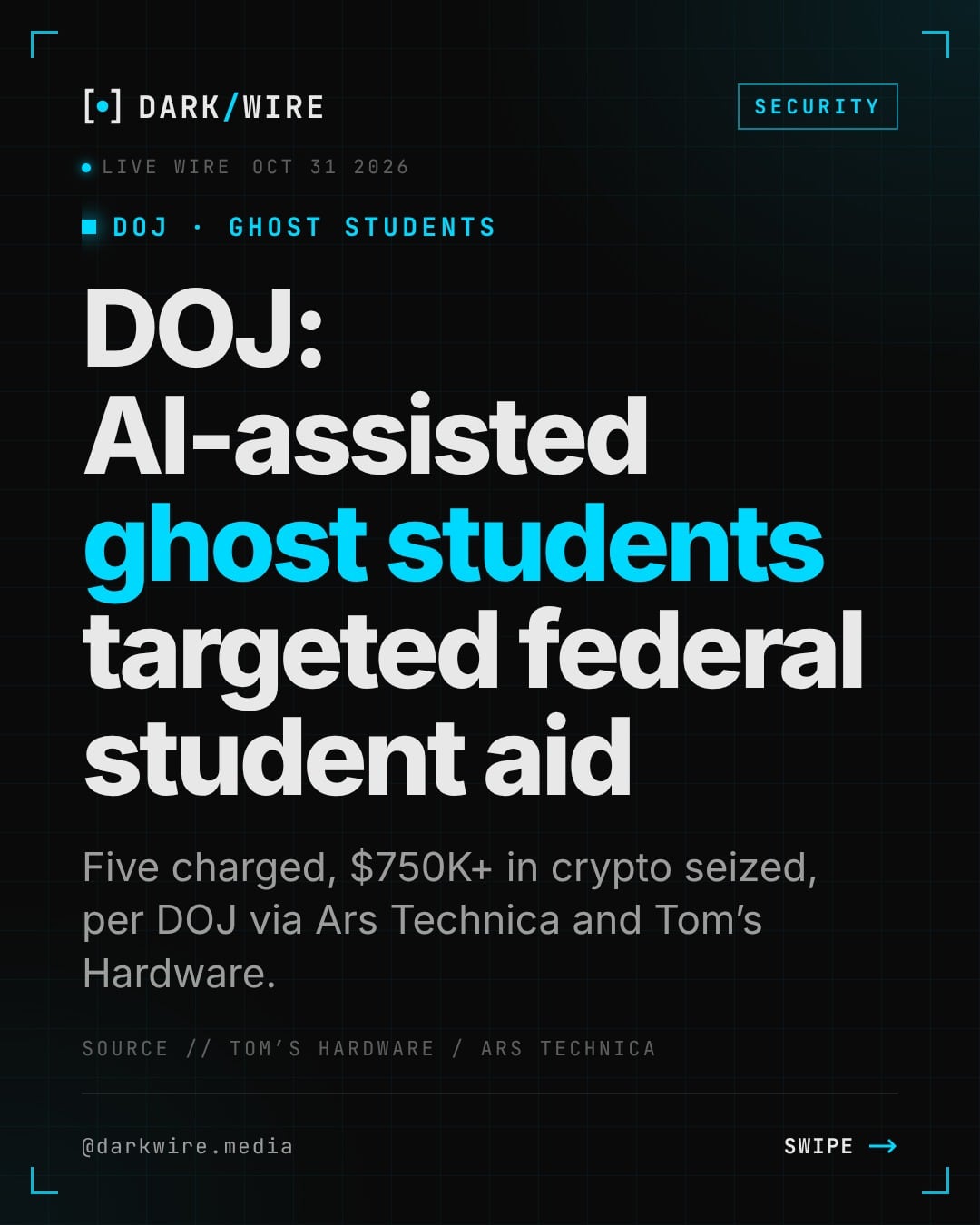
DOJ charges five over AI-assisted 'ghost student' loan fraud, seizes $750K+ in crypto.
According to the U.S. Department of Justice, as reported by Ars Technica and Tom's Hardware, the DOJ announced charges against five defendants and the seizure of more than $750,000 in cryptocurrency tied to the scheme, through a network associated with Kenyan nationals. Per DOJ officials, fraudsters buy Americans' personal information, most often targeting high school graduates who never attended college, and file FAFSA applications. Aid goes to schools first; leftover money is deposited into accounts the fraudsters control. The DOJ says AI is used to fill out applications, complete coursework and fake attendance in virtual sessions.
The numbers: officials identified more than $32 million in actual loss tied to these specific subjects and believe the actual total is substantially higher. The Education Department has identified over 830,000 potentially fraudulent federal student aid accounts; if all are ghost students, losses come close to $130 million, the DOJ said. In one case, a defendant used multiple bank accounts to receive over 700 fraudulently obtained refund deposits totaling approximately $1,439,548, the DOJ said. The DOJ suspects the scheme has run since at least 2021.
Why it matters: the DOJ says many known victims have only high school diplomas and may not learn of it until the government collects on loans years later. The Education Department says it has added online ID verification; applicants rated high risk are rejected. Advocates warn false flags could delay aid for real students, especially low-income students without government-issued ID. The administration expects few real students to be flagged.
Stolen identities, fake enrollments
Per DOJ officials, fraudsters buy Americans' personal data, mostly targeting high school grads who never went to college, then file FAFSA applications.
Where the money goes
Per DOJ, aid pays schools first; leftover money goes to fraudster-controlled accounts. DOJ said dozens of Americans opened bank accounts as money mules.
AI does the schoolwork
The DOJ says fraudsters use AI to fill out applications, complete coursework and make it appear a student is attending virtual sessions.
Why it matters
DOJ says many known victims hold only high school diplomas and may not learn of it until loans are collected years later. The Education Dept. says it added ID checks.
The facts we checked
According to the U.S. Department of Justice, as reported by Ars Technica and Tom's Hardware
- The DOJ announced charges against five defendants and the seizure of more than $750,000 in cryptocurrency tied to the scheme through a network associated with Kenyan nationals.Fact · Ars Technica and Tom's Hardware
- Per DOJ officials, fraudsters buy personal identifying information of Americans, most frequently targeting high school graduates who never attended college and went straight into the workforce.Reported · Ars Technica
- They file FAFSA applications to enroll in universities and community colleges; aid goes first to schools for tuition and fees, and leftover money is deposited into accounts controlled by the fraudsters.Reported · Ars Technica
- The DOJ says fraudsters use AI to fill out applications, complete coursework and make it appear a student is attending virtual sessions.Reported · Ars Technica and Tom's Hardware
- "It looks like the ghost student is actually completing the class." — Assistant Attorney General Colin M. McDonaldQuote · Ars Technica
- The DOJ said dozens of Americans opened bank accounts to act as money mules for the fraudsters.Reported · Ars Technica
- The Department of Education has "identified over 830,000 potentially fraudulent federal student aid accounts"; if all are ghost students, losses come close to $130 million, the DOJ said.Figure · Ars Technica
- Officials "identified more than $32 million in actual loss tied to these specific subjects" and said they believe the actual total is substantially higher.Quote · Ars Technica
- In one case, a defendant used multiple bank accounts to receive over 700 fraudulently obtained federal student aid refund deposits, totaling approximately $1,439,548, the DOJ said.Figure · Ars Technica
- The DOJ says many known victims have only high school diplomas and are shocked by faked attendance at an institution hundreds of miles away; victims may not learn of it until the government collects on loans years later.Reported · Ars Technica
- The DOJ suspects the scheme has run since at least 2021.Reported · Ars Technica
- The Education Department says it has added online identity verification, in which students show government ID to a camera and automated systems assign risk ratings; applicants rated high risk are rejected.Reported · Ars Technica
- Advocates warn false flags could delay aid for real students, particularly low-income students without government-issued ID. The administration expects few real students to be flagged.Reported · Ars Technica
Sources
- Tom's Hardware'Ghost Students' using AI to apply for student loans with stolen identities, DOJ's Operation Ghostbusters busts $200 million ring
- Ars TechnicaThousands of “ghost students” use AI to steal millions in student loans, DOJ says
Get stories like this the moment they drop.
More from the wire.
Grok's coding agent left 35,000 apps wide open
Researchers say Grok Build's link design exposed more than 35,000 apps, including 24 built by SpaceXSI
Binance's CFO exits a week after a $6.3B hack
Binance CFO Kaiser Ng is leaving the exchange a little over a week after a reported $6.3 billion hack; the company says a transition plan has been in place for half a year
1.3M Android TV boxes shipped with a backdoor, Google says
Google says TV box maker Videostrong built a backdoor into its devices, creating the 1.3M-device XCPE botnet; Google and partners have disrupted it and banned the company
Never miss the wire.
The day's biggest AI and tech stories in one short, sourced email.